How Denver's Thin Air Reshapes NFL Passing Props and Totals for Bettors at Domestic Sportsbooks
Finley Schröder · May 16, 2026
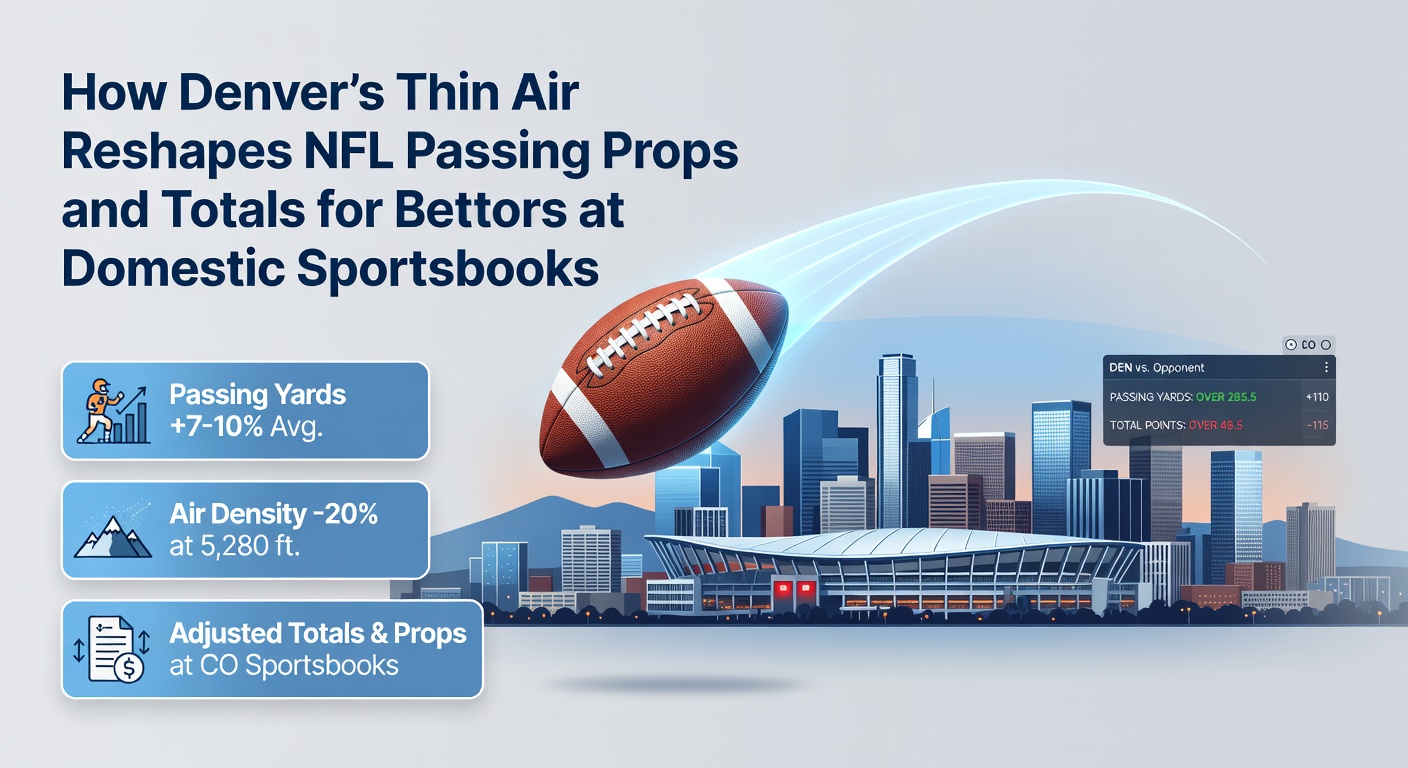
How Denver's Thin Air Reshapes NFL Passing Props and Totals for Bettors at Domestic Sportsbooks
The elevation at Empower Field at Mile High reaches 5,280 feet above sea level, and that altitude creates measurable changes in how footballs travel through the air during NFL games. Quarterbacks experience reduced air resistance which allows passes to maintain velocity longer and cover greater distances compared to sea-level venues, a factor that directly influences passing yardage statistics tracked by the league.
Research from sports performance laboratories indicates that the thinner atmosphere reduces drag on the ball by approximately 10 to 15 percent, resulting in throws that often exceed their expected range by several yards. This physical reality leads teams playing in Denver to post elevated passing numbers, with home quarterbacks averaging between 25 and 40 additional yards per game when compared to their season-long marks at lower elevations.
Physics Behind the Passing Advantage
Air density drops significantly at higher altitudes, and the football encounters less opposition as it spirals toward receivers, which allows for tighter spirals and extended flight times before gravity pulls the ball down. Observers note that this effect becomes most pronounced on deep throws and intermediate routes where the ball spends more time airborne, while shorter passes show smaller but still measurable gains in completion distance.
Data compiled across multiple NFL seasons reveals that passing totals in Denver consistently rank among the highest in the league, with both home and visiting quarterbacks benefiting from the conditions. Visiting teams sometimes struggle with timing adjustments because their practice environments rarely replicate the same altitude, leading to occasional overthrows early in games before players adapt.
Impact on Player Prop Markets
Betting markets at domestic sportsbooks adjust passing yardage props upward when Denver appears on the schedule, and sharp bettors track historical splits to identify value. A quarterback who averages 245 yards per game might see his prop line set at 265 or higher for a Denver matchup, reflecting the established altitude boost documented in league play-by-play records.
Over props become attractive in these spots because the environmental factor compounds with offensive scheme tendencies, whereas under bets require stronger justification such as poor weather forecasts or elite opposing secondaries that limit attempts. Multiple studies of altitude effects confirm that completion percentages also trend slightly higher in Denver since receivers gain extra separation on routes that stretch defenses vertically.
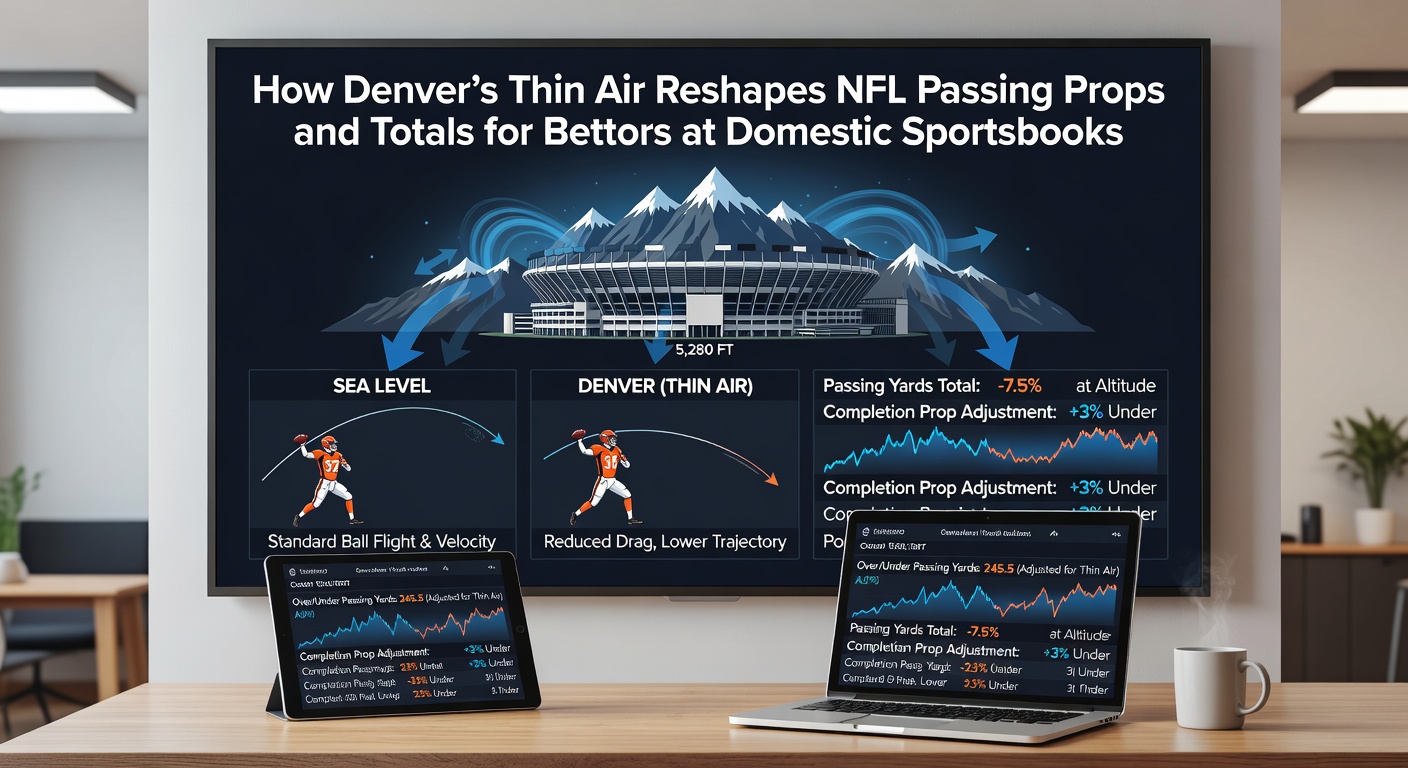
Line movement patterns show that totals markets often climb throughout the week as bettors react to the same historical trends, yet early lines sometimes remain underpriced when sportsbooks prioritize broader game scripts over specific venue data. Those who monitor injury reports alongside altitude factors find additional edges, since defensive backs who rely on recovery speed may fatigue faster in thinner air and surrender more big plays downfield.
Adjustments for Game Totals adn Parlays
Game totals incorporate the passing inflation along with rushing and scoring effects, and totals frequently land in the upper range of projected scores when Denver hosts. Bettors constructing same-game parlays often combine an over on total passing yards with an over on the game total, since the two outcomes correlate strongly under these conditions.
According to performance analytics from the American Gaming Association, markets that account for venue-specific environmental data show tighter spreads and lower hold percentages over time. This precision matters because correlated legs in parlays can shift the overall payout structure when one factor like altitude drives multiple statistical categories simultaneously.
Sharp action tends to concentrate on player props rather than full-game totals because individual quarterback lines provide clearer historical benchmarks, whereas defensive adjustments or weather variables introduce more variance into combined scoring projections. Observers tracking line movement at major sportsbooks report that Denver games produce some of the largest week-to-week shifts in passing-related props across the schedule.
Seasonal Patterns and Long-Term Data
Records maintained by the NFL show that Denver has ranked in the top five for total passing yards allowed and gained in 11 of the past 15 seasons, a streak that spans multiple coaching staffs and roster changes. This consistency allows bettors to build reliable models that isolate the altitude variable from other influences such as offensive line quality or receiver speed.
Canadian researchers studying similar high-altitude environments in other sports have contributed comparative data showing parallel increases in projectile distances, reinforcing the physical principles observed in American football. Bettors who cross-reference these findings with weekly injury reports and practice participation percentages gain an incremental edge when constructing prop bets for early-season matchups before full acclimation occurs.
Conclusion
Denver's elevation continues to shape how passing statistics unfold each week, and sportsbooks respond by calibrating props and totals accordingly. Bettors who incorporate historical splits, line movement timing, and correlated outcomes position themselves to navigate these markets with greater consistency across domestic platforms. The physical reality of thinner air remains a fixed variable that repeats season after season, providing a stable foundation for analysis when combined with current roster and scheme information.