NFL Referee Crew Variations Shape Penalty Prop Markets at US Sportsbooks
Willa Russell · May 21, 2026
NFL Referee Crew Variations Shape Penalty Prop Markets at US Sportsbooks
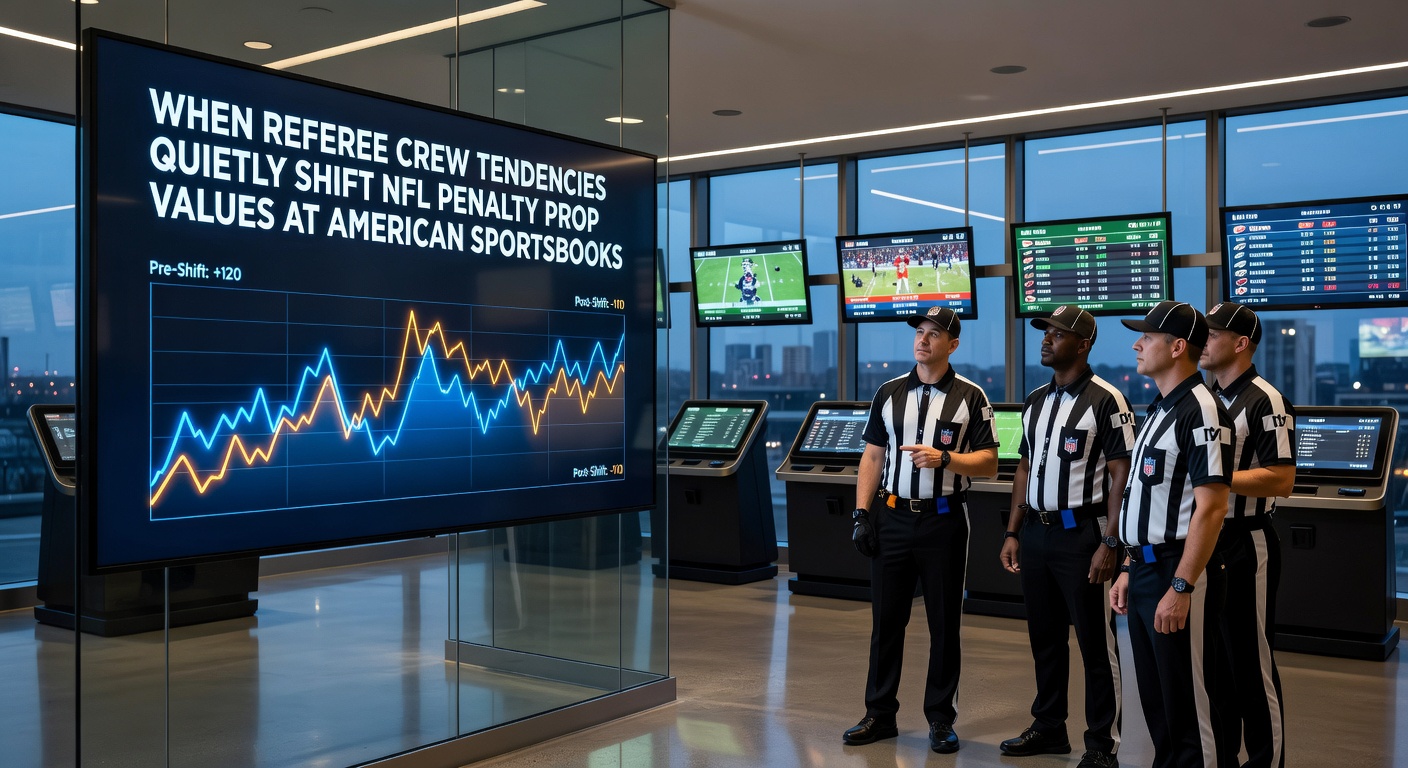
Referee crews in the National Football League carry distinct patterns that influence how many penalties appear in any given contest, and those patterns quietly alter the value of penalty-related proposition bets offered by American sportsbooks. Each crew works a slate of games under the league's supervision, yet observers note measurable differences in total flags thrown, penalty yards assessed, and the frequency of specific infractions like holding or pass interference. Bettors who track these tendencies find opportunities in over-under lines on total penalties or in props tied to particular defensive and offensive infractions.
Understanding Crew-Level Patterns
Data compiled across multiple seasons shows that some crews consistently rank among the highest in total penalties per game while others sit near the bottom of the league distribution. Researchers who analyzed play-by-play records discovered that the spread between the most and least penalty-prone crews can exceed four flags per contest on average. Those differences matter because sportsbooks set penalty props using league-wide averages that do not always adjust quickly enough for the specific crew assigned to a matchup. When a high-volume crew receives a game featuring two pass-heavy offenses, the over on total penalties often carries more value than the closing number suggests.
Key Factors That Drive Variation
Experience levels within each crew, the presence of veteran officials on the field, and the specific rules emphasis the league communicates before the season all contribute to observable differences. One study released by a sports analytics group found that crews with longer tenures together tend to call fewer procedural penalties yet maintain steady rates on contact-related fouls. Weather conditions and stadium environment add another layer, since crews working in domed stadiums show slightly lower rates of delay-of-game infractions compared with those assigned to outdoor venues in colder climates. American sportsbooks incorporate weather data into totals but still rely on historical crew averages when constructing penalty props.
Market Response at Major US Operators
Leading sportsbooks in states such as New Jersey, Pennsylvania, and Colorado adjust penalty prop lines using a combination of league averages and crew-specific metrics. Sharp bettors who monitor official crew assignments released each Wednesday often place early wagers before limits tighten. Data from industry reports indicate that penalty-related props now account for a measurable share of NFL same-game parlay volume, especially in prime-time and playoff contests where public interest spikes. When a crew known for strict enforcement of offensive line holding draws a matchup between two teams with high sack totals, the over on combined penalties frequently moves several tenths of a point within hours of release.
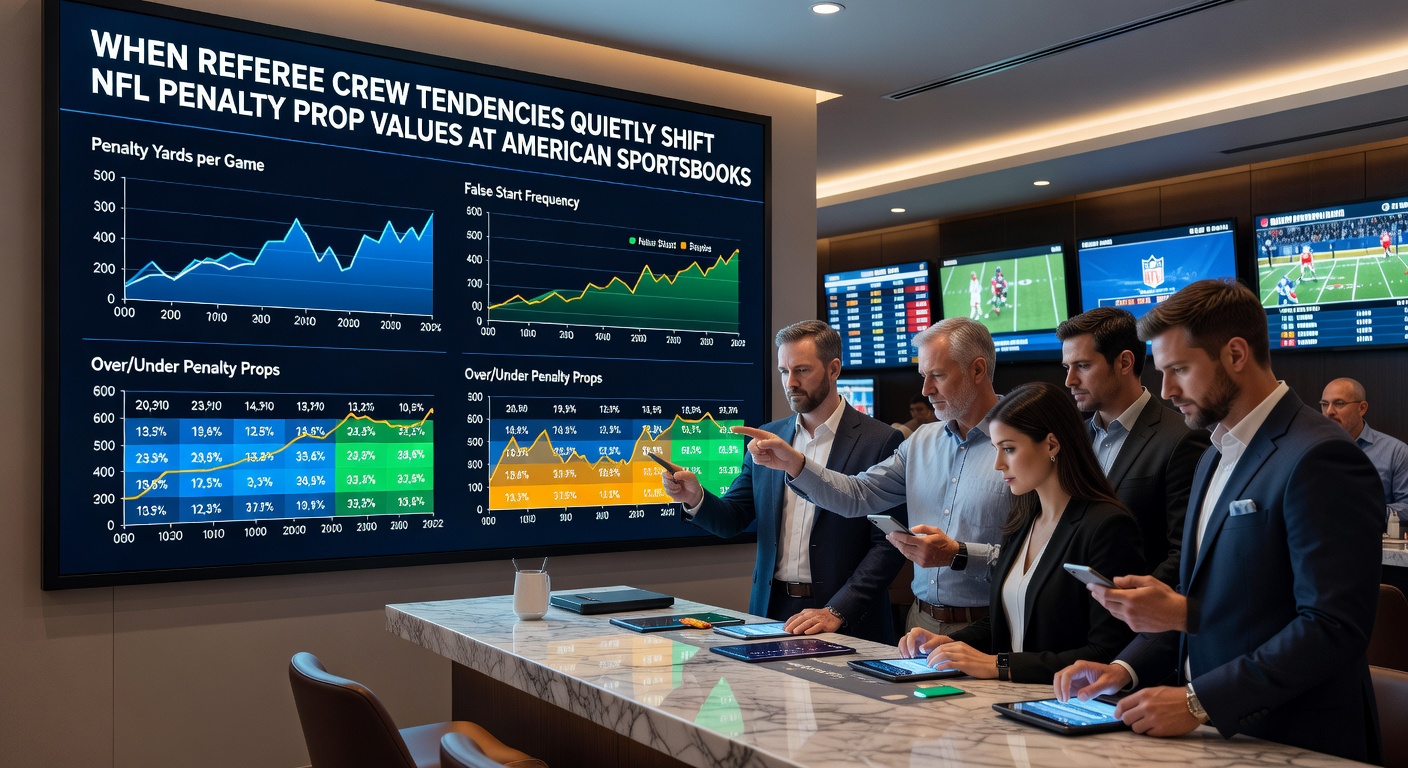
What's interesting is how these adjustments interact with in-game betting. Live odds on total penalties shift noticeably after the first quarter once bettors observe the crew's actual pace. Operators respond by widening or tightening the spread depending on the early flag count, and sharp players who recognize a high-volume crew early can exploit those movements. According to figures compiled by the American Gaming Association, NFL prop betting volume has grown steadily, with penalty categories showing particular resilience during weeks when totals on points and yards face heavy public action.
Case Examples From Recent Seasons
Take one matchup from the 2024 campaign in which a crew with a documented high rate of pass-interference calls worked a game between two teams ranked in the top five for passing attempts. The closing total on combined penalties sat at 11.5, yet the game finished with 16 flags and the over cashed comfortably. Observers who reviewed the play-by-play noted that seven of those flags fell under categories the crew historically over-called relative to league norms. A separate contest featured a crew with lower overall volume working a run-heavy matchup; the under on penalties cleared by three flags despite pre-game projections that leaned higher.
Those who've studied this pattern recognize that early-season assignments provide the cleanest signals because crews have not yet faced mid-season adjustments from league supervisors. By October and November, some crews receive additional guidance on specific rules points, which can compress the spread between high- and low-volume groups. Bettors tracking these shifts often wait until after week six before committing larger stakes to crew-based penalty props.
Looking Ahead to 2026 Adjustments
League officials have signaled potential emphasis changes ahead of the 2026 season that could further differentiate crew tendencies. Discussions around stricter enforcement of defensive holding and a renewed focus on quarterback protection mechanics may increase flag totals for crews already inclined toward contact fouls. Sportsbooks have begun modeling these scenarios in advance, and early lines for training-camp and preseason contests will likely reflect updated baselines. Those adjustments could create new edges for bettors who compare projected 2026 crew rosters against historical data once assignments become public.
Practical Considerations for Bettors
Successful approaches usually combine crew history with team-specific tendencies and situational factors such as divisional rivalries that historically produce more flags. A crew with moderate overall volume may still generate spikes in penalties when assigned to a heated matchup between longtime division opponents. American sportsbooks occasionally shade lines toward the public side in these situations, which can leave value on the opposite end for disciplined players who review the underlying crew metrics. Resources such as official NFL play-by-play archives and independent analytics platforms provide the raw numbers needed to build these models without relying on anecdotal impressions alone.
One researcher who examined five seasons of crew data noted that the most reliable edges appear in games featuring backup quarterbacks or teams resting starters late in the season. In those contests the baseline penalty rate drops, and crews with lower historical volume become especially attractive for under bets. The same study highlighted that neutral-site playoff games sometimes neutralize crew differences because both teams prepare more thoroughly and commit fewer procedural mistakes.
Conclusion
Referee crew tendencies represent a measurable but often overlooked variable in NFL penalty prop markets. American sportsbooks continue to refine their offerings as data becomes more accessible, yet gaps remain between league-wide averages and crew-specific realities. Bettors who invest time in reviewing historical assignments and cross-referencing them with current team profiles can identify situations where prop values diverge from true probabilities. As the league moves toward potential rule emphases in May 2026, those who maintain updated crew profiles stand positioned to capture edges that casual participants overlook.