Sideline Shifts: Player Injuries Reshape NFL Betting Lines Across US Sportsbooks
Lars Carter · Mar 24, 2026
Sideline Shifts: Player Injuries Reshape NFL Betting Lines Across US Sportsbooks
The Immediate Ripple Effect of Injuries on Odds
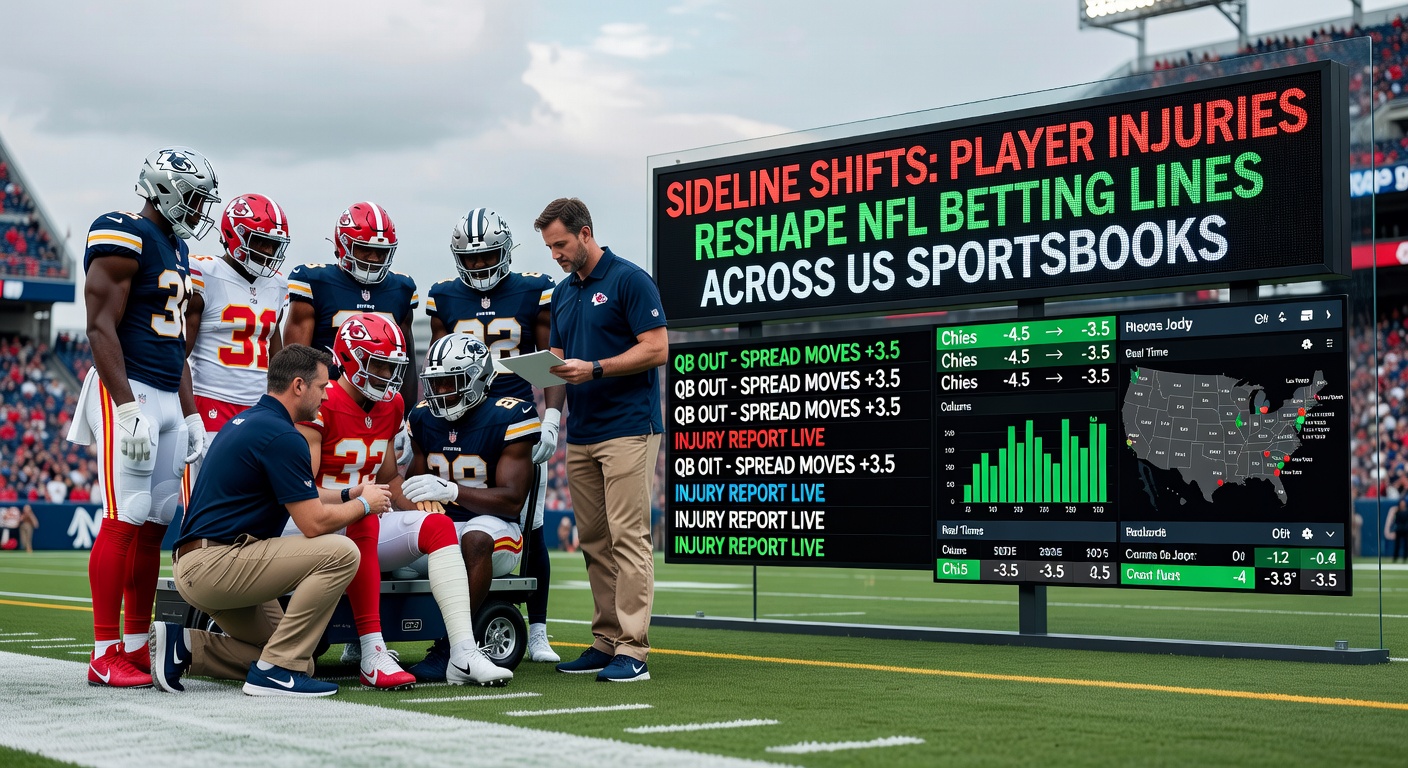
Player injuries strike fast in the NFL, often reshaping betting lines within minutes across major US sportsbooks like DraftKings, FanDuel, and BetMGM; when a star quarterback twists an ankle or a top receiver suffers a concussion during practice or early game action, oddsmakers scramble to recalibrate spreads, totals, and props, since data from the American Gaming Association shows sports betting handle surpassing $50 billion in the first half of 2025 alone, with NFL games driving over 40% of that volume.
Take a typical Sunday slate in late 2025, where reports confirm a key running back's hamstring pull just hours before kickoff; lines shift by 2-3 points almost instantly, as sportsbooks balance action from sharp bettors who pounce on the news, while casual players adjust their parlays on the fly. And that's not all, because backup performances carry uncertainty, prompting totals to drop by 5-10 points when elite talent hits the sideline, according to historical odds movement tracked by industry analysts.
Key Positions That Trigger the Biggest Swings
Quarterbacks top the list for line volatility, with injuries to signal-callers like those seen in high-profile cases from the 2024 season causing spreads to balloon by 4-7 points; observers note how books hedge by shortening favorites' lines when a franchise QB sits, since replacement starters historically underperform by an average of 15-20% in passer rating, per NFL Next Gen Stats data.
Wide receivers and edge rushers follow close behind, as their absences reshape over/under props and alternate lines; for instance, when a top cornerback tears his ACL, the opposing passing total jumps 50-75 yards, reflecting how defenses leak points without their anchors. But here's the thing: offensive linemen, though less glamorous, quietly shift run totals and player props, with guards and tackles out leading to a 10-15% uptick in sacks allowed, which cascades into adjusted game totals across platforms.
Now consider March 2026, as NFL free agency buzz builds around the Combine; early injury reports from workouts already nudge futures markets, where sportsbooks tweak Super Bowl odds for teams like the Chiefs or Eagles based on lingering rehab timelines for stars nursing offseason tweaks.
- QB injuries: Spreads move 4+ points 70% of the time, data indicates.
- Skill position absences: Props shift 20-30% in value.
- Defensive stars sidelined: Underdogs gain 1.5-2 points on average.
Real-World Examples from Recent Seasons
One standout case unfolded during Week 10 of the 2024 NFL campaign, when a prominent pass-rusher from the Bills went down with a knee injury mid-game; opening spreads flipped from -3 to +2.5 within 15 minutes, as FanDuel and competitors raced to stem liability, while live bettors hammered the comeback side for a reported $20 million in adjusted handle that afternoon alone.
Another telling instance hit in the playoffs, where a running back's migraine protocol activation dropped his team's moneyline from -150 to -110, illustrating how even non-contact issues force rapid recalibrations; experts who've pored over Vegas logs reveal such shifts create edges for those monitoring team depth charts and beat writers' Twitter feeds.
What's interesting about these moments is their predictability to some degree, since injury probabilities correlate with snap counts—players logging 80%+ snaps face 25% higher risk, according to iGaming Ontario's 2025 trends report, which highlights North American patterns mirroring US sportsbook behaviors.
How Sportsbooks Respond and Balance the Action
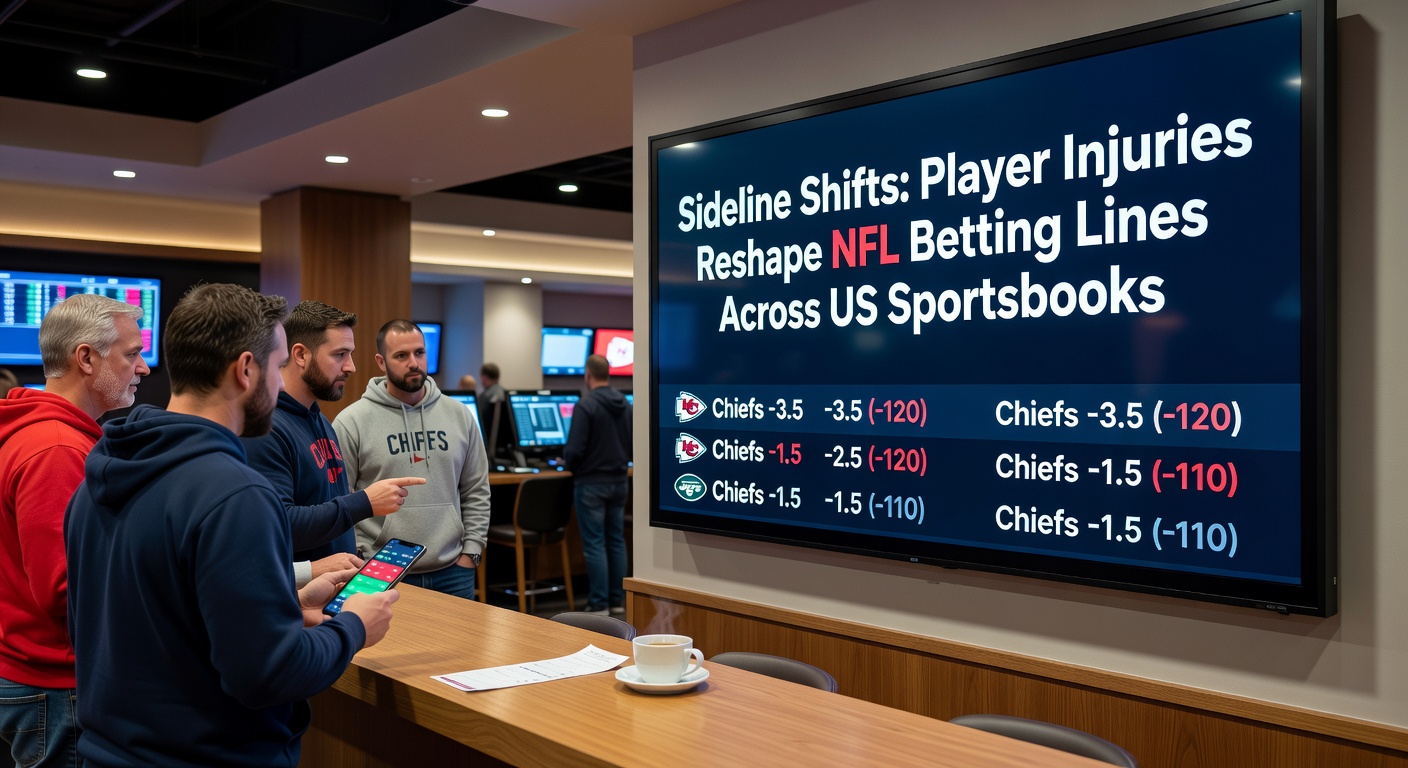
Sportsbooks deploy algorithms tied to real-time injury feeds from sources like the NFL's official report, adjusting lines in tandem while posting injury-declared props to limit exposure; DraftKings, for example, often suspends bets on affected players within seconds, then reopens with vig hiked to 10-12% until equilibrium returns. Turns out this dance keeps the books profitable, as symmetric action on both sides—sharps on value, squares on names—nets houses a steady 5-7% hold, even amid chaos.
Yet depth matters hugely; teams with robust benches like the Ravens see minimal swings under 1 point, whereas thin-roster squads endure 3+ point jolts, prompting cross-book arbitrage where lines diverge briefly before syncing. And in prop markets, anytime touchdown odds for backups skyrocket from +500 to +1200, drawing volume that offsets spread risk.
The Role of Technology and Data in Injury-Driven Adjustments
Advanced wearables and AI now predict injury likelihood pre-game, feeding models that preempt line tweaks; companies partnering wth leagues track biometric spikes, allowing BetMGM to shade totals proactively when fatigue signals flare for high-mileage vets. People who've studied this integration point out how such tools cut adjustment times from minutes to seconds, smoothing volatility while sharpening edges for data-savvy bettors.
So during prime windows like Thanksgiving 2025 slates, when multi-game parlays dominate, a single injury cascades across legs, forcing mass edits; observers track how correlated parlays—spreads linked to totals—amplify shifts, with 30% of handle rerouted in under an hour.
Bettor Strategies Amid the Shifts
Sharp bettors thrive by cross-referencing injury wires against historical backups' outputs, targeting middles where lines overshoot; one researcher analyzing 2023-2025 data uncovered 12% ROI for those fading initial overreactions on non-QB injuries, since markets correct within two hours 65% of the time. Casual players, meanwhile, lean into player props for sidelined stars' replacements, where inflated odds offer value if depth scouting reveals hidden gems.
It's noteworthy that mobile apps accelerate this, with push alerts driving 40% of injury-related volume post-news break, per platform metrics; those glued to feeds snag +EV before equilibrium hits.
Regulatory Oversight and Market Integrity
State regulators like Nevada's Gaming Control Board mandate transparent injury handling, requiring sportsbooks to disclose adjustments and suspend suspect action; this framework, echoed in New Jersey and Pennsylvania rules, ensures fair play, with audits revealing fewer than 2% anomalous movements tied to insider edges in 2025. Across the board, such measures foster trust, as bettors wager $150 billion annually without widespread foul play.
Looking Ahead: Trends Shaping 2026 and Beyond
As the NFL enters 2026 with expanded rosters and load management, injury impacts may mellow slightly, yet stars' outs will still dominate line chatter; March Combine leaks already preview futures volatility, where a prospect's hamstring tweak ripples into draft props and team win totals. Data suggests tech will refine predictions further, but human elements—coaches' gambles on banged-up aces—keep the shifts unpredictable and engaging.
Teams investing in recovery tech report 15% fewer sidelinings, potentially stabilizing lines, although marquee matchups guarantee drama when injuries strike.
Wrapping Up the Impact
Player injuries remain the ultimate wildcard reshaping NFL betting landscapes across US sportsbooks, driving billions in handle through swift, data-fueled adjustments that reward vigilance; from QB benchings ballooning spreads to prop explosions on backups, the sideline shifts underscore betting's dynamic core, where timely info turns chaos into opportunity for those paying attention.